
LUXBEAM® LRS-MCx-HD
Highest productivity through scrolling
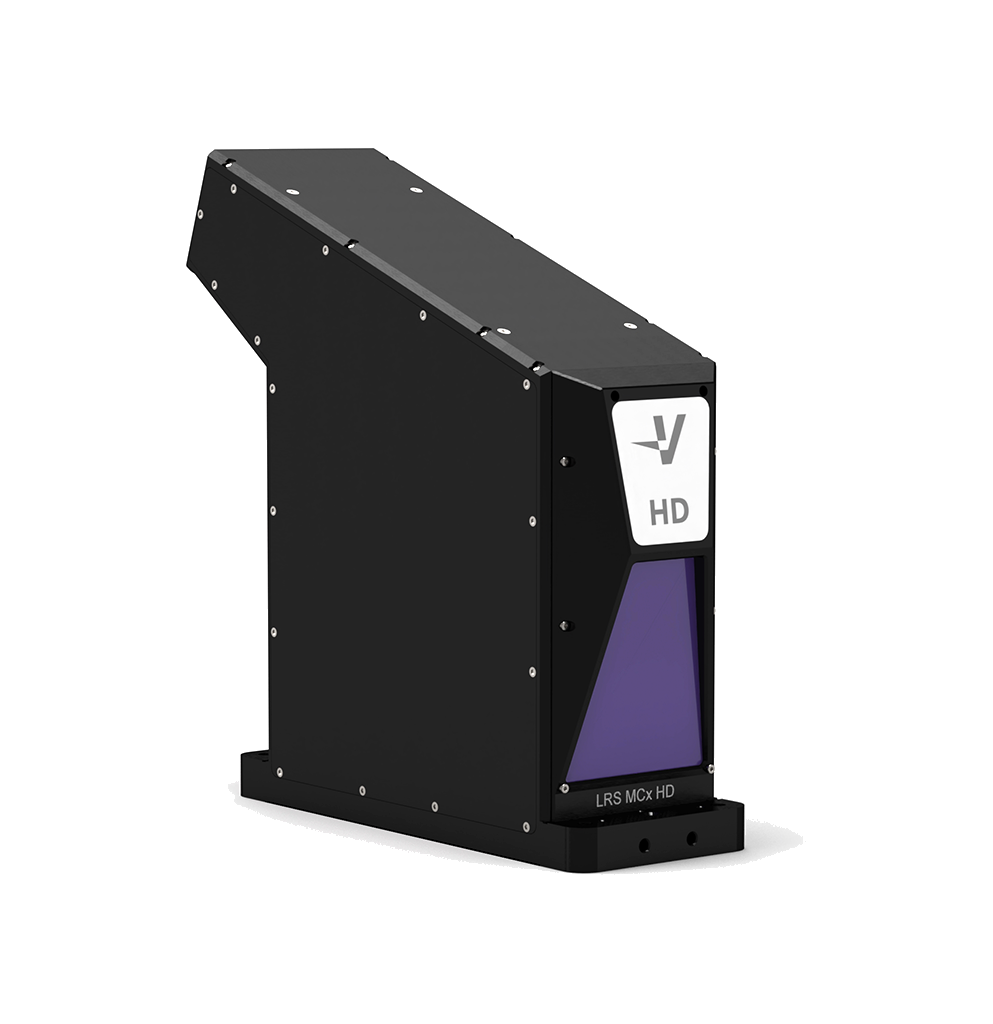
The LUXBEAM® Rapid System LRS-MCx HD is designed for high-throughput 3D printing and additive manufacturing, in static or scrolling configurations using one or more projectors.
- Native HD pixels
- 2.1 MP
- UV output · 405 nm
- ≤ 10 W
- Stitched pixel pitch
- 50 µm
- Shared platform
- NEOS
LUXBEAM® LRS-MCx-HD
Achieve the highest productivity from a single subsystem by stacking and scrolling
A narrow footprint enables the stackability of modules with stitched images down to a 50-micron pixel pitch. In a scrolling dynamic configuration that gives the highest manufacturing throughput from a single-pass linear motion system, and the liquid-cooled modules offer a long lifetime at the ultimate performance.
Recommended use
- Multihead scrolling systems
- High-power static configuration
What sets it apart
-
1080p across the build
The robust DLP9500/DLP9500 UV chipset resolves 1920 × 1080 in native pixel mode, and special alignment features grant pixel-precise alignment of stacked modules.
-
Up to 10 W of UV
460, 405, 385 or 365 nm LED options driven by Bifrost S — constant flux with optical feedback or fixed current, PPC-corrected to better than 99% uniformity.
-
Advanced controller
The LUXBEAM® LB4800 controller with LAMA™ Standard and its API; 10 G bandwidth allows streaming, and a dedicated motion controller unlocks full functionality.
Specifications
LRS-MCx-HD — full specification
Properties
Imaging
- DMD Type
- 0,95” 1080p HD (VIS/UV)
- Resolution
- 1920 x 1080 px
- Pixel pitch
- 2.7–187 µm
- Image size
- 5.2–359 × 2.9–202 mm
- Image plane
- 15–34293 mm²
- Operation Mode
- Native pixel mode, scrolling; Subpixelation SPX mode (requires LAMA Pro)
- Power Uniformity
- >99% PPC corrected
Light & power
- Projector Output Power
- Up to 10 W (460 / 405 nm), 9 W (385 nm), 7.5 W (365 nm)
- Wavelength
- 365–405 nm
- Power density
- 0.01–11.91 W/cm²
- LED Options
- 460 nm / 405 nm / 385 nm / 365 nm
- LED Driver
- Bifrost S; Constant flux with Optical Feedback or Fixed Current
- Power consumption
- Max 300 W
- Power supply
- 12 V DC
Mechanical & thermal
- Dimensions w/o lens
- 270 mm (H) x 94 mm (W) x 230 mm (L)
- Total weight w/o PSU
- 5 kg (w/o lens)
- Cooling system
- Liquid cooling
- Frame Sync
- External Frame Synchronization
Platform & software
- Software
- LAMA Standard (included)
- Image Data
- Pattern Streaming with LAMA
- Communication
- Ethernet
- UV / IR Safety
- LED Safety Switch enable/disable
Additional specs
- Features
- NEOS, PPC, LAMA STD, SSw
Lens options
| PL LRS 0.3 HC 405nm | 16mm | 268mm | 2.7µm | 5.2 × 2.9mm² |
|---|---|---|---|---|
| PL LRS 0.5 HC | 50mm | 268mm | 5.4µm | 10.4 × 5.8mm² |
| PL LRS 1.0 HC | 71mm | 268mm | 10.8µm | 20.7 × 11.7mm² |
| PL LRS 2.0 HC | 90mm | 269mm | 21.6µm | 41.5 × 23.3mm² |
| PL LRS 3.6 | 148mm | 239mm | 40µm | 76.8 × 43.2mm² |
| PL LRS 4.6 | 178mm | 279mm | 50µm | 96 × 54mm² |
| PL LRS 5.3 VIS | 161mm | 376mm | 57.2µm | 109.8 × 61.8mm² |
| PL LRS 8.3 | 375mm | 463mm | 90µm | 172.8 × 97.2mm² |
| PL LRS 9.9 | 493mm | 263mm | 107.2µm | 205.8 × 115.8mm² |
| PL LRS 11.7 | 575mm | 667mm | 128.6µm | 246.9 × 138.9mm² |
| PL LRS 17.2 | 884mm | 975mm | 187µm | 359 × 202mm² |
Working and mounting distances are nominal; consult the datasheet for tolerances under your configuration.
What is the LRS-MCx-HD?
A 1080p DLP light engine for high-throughput implementations in 3D printing and additive manufacturing, in static or scrolling configurations with one or more projectors. It is a subsystem you mount in your own machine.
How fine a pixel pitch can it stitch?
Down to 50 microns. The narrow footprint lets modules stack with stitched images at that pitch, and alignment features hold them pixel-precise.
What drives it?
The LUXBEAM® LB4800 controller, with the LAMA™ Standard software package and API. 10 G bandwidth even allows streaming; maximum performance and full functionality need a dedicated motion controller.
How productive is a stacked system?
Visitech’s own calculation: with PL LRS 4.6× projection lenses, four stacked light engines deliver a stitched image 380 mm wide at 7,620 pixels across, and a 700 mm scroll range gives 650 mm of length at 13,000 pixels. Print time per layer depends on the material, but estimates put one 4-head subsystem on a par with 128 static desktop machines at the same pixel pitch.
Which lens should I choose?
It depends on your pixel pitch and build area — the lens table above lists working distance, mounting distance, pixel pitch and native image size for every PL LRS option.
Get started
Need more details? Let’s talk
Tell us about the build envelope, resolution and throughput you need — we’ll come back with a configuration, lens choice and a timeline.
- NorwayHQ · Drammen
- ChinaShanghai
- United StatesAllen, TX
- JapanTokyo