
LUXBEAM® LRS-MCx NIR
Speed, resolution and build area for powder bed fusion
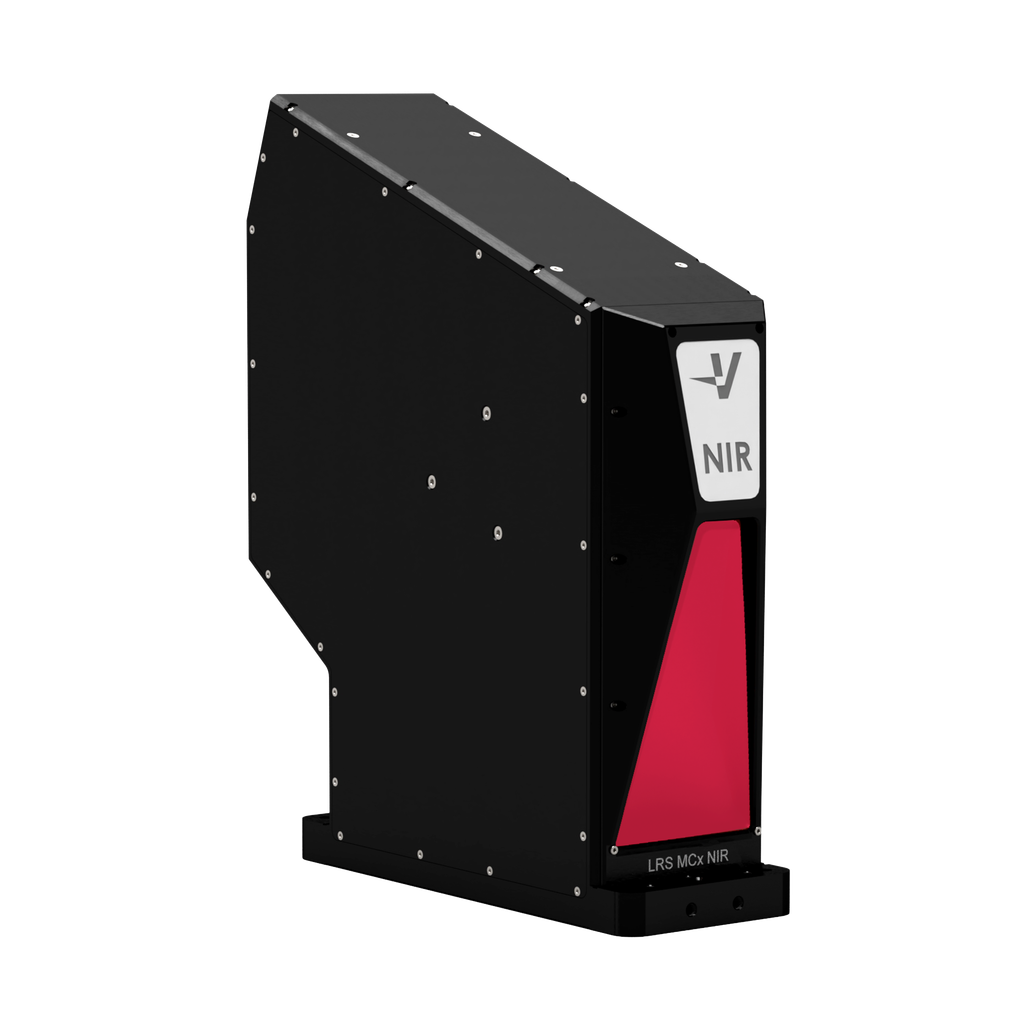
The LUXBEAM® Rapid System LRS-MCx NIR removes the traditional limitations of polymer-based powder bed fusion: high-throughput, high-resolution PBF with unprecedented near-infrared power and flexible static or scrolling arrangements.
- NIR output · 1064 nm
- ≤ 100 W
- Native WXGA pixels
- 1280 × 800
- Power uniformity
- > 99%
LUXBEAM® LRS-MCx NIR
Maximum throughput in powder bed fusion
Where selective laser sintering heats the polymer point by point and layer by layer, the LRS-MCx NIR rationalizes toward a pure layer-by-layer approach with instant 2D imaging, a path toward high-productivity systems for polymer-based powder bed fusion.
Recommended use
- Multihead scrolling systems
- Static systems
What sets it apart
-
One-shot layer exposure
A DLP650LNIR 0.65-inch WXGA chipset exposes the entire print layer in one shot (the critical driver of build speed), at 1280 × 800 native pixels.
-
Up to 100 W of NIR
A proprietary integrated laser diode module works with an external fibre-coupled source in the 800–1200 nm range, driven by IgnitIR with throughput control that safeguards the DMD.
-
Direct Image Sintering
Liquid-cooled modules stack for stitched images in static, step-and-flash or scrolling configurations, so DIS holds resolution across a build area classical polymer PBF cannot reach.
The technology
Built for Direct Image Sintering
Direct Image Sintering (DIS) is Visitech’s approach to polymer powder bed fusion: DLP® and powerful IR laser diode arrays expose the whole print layer at once, instead of heating the powder point by point the way classical selective laser sintering does. Exposing the entire layer is what drives build speed, and the LRS-MCx NIR is the light engine built to do it.
LRS-MCx NIR full specification
Properties
Imaging
- DMD Type
- DLP650LNIR 0,65” WXGA (NIR)
- Resolution
- 1280 × 800 px · WXGA (1280 × 800)
- Pixel pitch
- 20–175 µm
- Image size
- 25.6–224 × 16–140 mm
- Image plane
- 410–31360 mm²
- Operation Mode
- Native pixel mode, scrolling
- Power Uniformity
- > 99% after Software Correction
Light & power
- Projector Output Power
- Up to 100 Watts
- Wavelength
- 1064 nm
- Laser Options
- 1064 nm (other configurations on request)
- Laser Driver
- IgnitIR
- Power consumption
- Max 1000 Watts
- Power supply
- 12 V DC
Mechanical & thermal
- Dimensions w/o lens
- 305 mm (H) x 92 mm (W) x 240 mm (L)
- Total weight w/o PSU
- 5 kg (w/o lens)
- Cooling system
- Liquid cooling
- Frame Sync
- External Frame Synchronization
Platform & software
- Software
- LAMA Complete API (Windows, Linux), platform-independent web interface; Advanced Control SW package
- Image Data
- Pattern Streaming with LAMA
- Communication
- Ethernet
- UV / IR Safety
- LED Safety Switch (enable/disable)
Additional specs
- Features
- PPC (LAMA), SSw
Lens options
| MCx 1.85x NIR | 71mm | 186mm | 20µm | 25.6 × 16mm² |
|---|---|---|---|---|
| MCx 3.7x NIR | 150mm | 302mm | 40µm | 51.2 × 32mm² |
| MCx 7.0x NIR | 220mm | 352mm | 75µm | 96 × 60mm² |
| MCx 16.0x NIR | 210mm | 349mm | 175µm | 224 × 140mm² |
Working and mounting distances are nominal; consult the datasheet for tolerances under your configuration.
What is the LRS-MCx NIR?
A near-infrared DLP light engine for polymer-based powder bed fusion. A DLP650LNIR 0.65″ WXGA chipset works with an external, fiber-coupled NIR laser in the 800–1200 nm range, exposing a whole layer at a time.
What is Direct Image Sintering?
Visitech’s DIS concept uses DLP and powerful IR laser diode arrays to expose the entire print layer in one shot, instead of heating the polymer sequentially point by point as classical selective laser sintering does. Exposing the whole layer is the critical driver of build speed.
How much power reaches the image?
Up to 100 W in the projected 2D image, from a proprietary integrated laser diode module driven by IgnitIR, at better than 99% uniformity after software correction.
Static, step-and-flash or scrolling?
All three. The liquid-cooled modules stack for stitched images in any of them, which is what gives the highest manufacturing throughput on a single-pass linear motion system.
Is there a ready-made motion system?
Yes. The LUXBEAM® LRS-MCx MOTION STAGE is a plug-and-play reference stage that accommodates up to four LRS-MCx heads, designed for bottom-up and top-down installations and equally at home in UV stereolithography and polymer PBF.
Get started
Need more details? Let’s talk
Tell us about the powder, the layer time and the build envelope you need — we’ll come back with a configuration, lens choice and a timeline.
- NorwayHQ · Drammen
- ChinaShanghai
- United StatesAllen, TX
- JapanTokyo