
LUXBEAM® LRS-WQ Plus
Maximum power for static 3D print systems
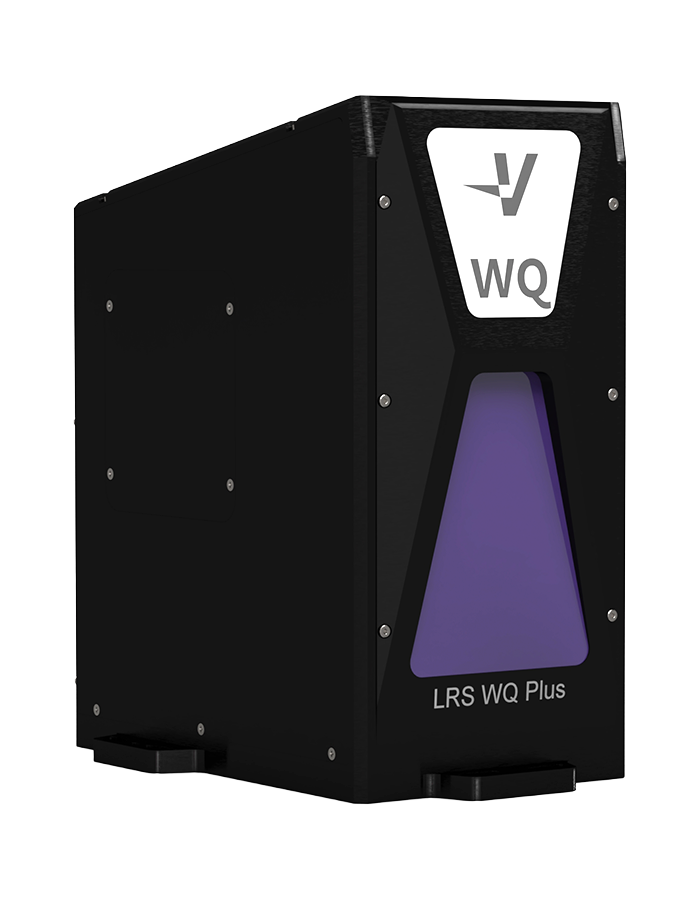
The LUXBEAM® Rapid System WQ Plus is a robust, liquid-cooled, plug-and-play light engine for professional 3D printing, static additive manufacturing and prototyping. High performance with the flexibility the industry keeps asking for.
- WQXGA pixels
- 4.1 MP
- UV output · 405 nm
- ≤ 10 W
- Finest pixel pitch
- 1.9 µm
- Power uniformity
- > 99%
LUXBEAM® LRS-WQ Plus
Power, resolution and ultimate pixel control
Optimized for UV wavelengths from 365 to 460 nm with precise temperature control through liquid cooling, the LRS-WQ Plus puts up to 10 W of UV power in the image (more than any other single-LED UV projector), which is what makes it a static printer’s engine for large build areas.
Recommended use
- High-power static stacked configuration
What sets it apart
-
1.9 to 130.9 micron pitch
The robust DLP9000 WQXGA chip resolves 2560 × 1600 for A4-sized build areas. Configured with small magnification lenses, the same engine does micro 3D printing.
-
10 W in the image
More UV power in the image than any other single-LED UV projector, at better than 99% uniformity: liquid cooling stabilizes the LED source and lets it run at higher power still.
-
Stack, stitch, run 24/7
Engines stack and stitch into extremely large, high-detail build areas with AM-optimized edge blending in LAMA™; an integrated CPU and industrial Ethernet handle monitoring, tracking and logging.
Specifications
LRS-WQ Plus full specification
Properties
Imaging
- DMD Type
- DLP9000 0,9” WQXGA
- Resolution
- WQXGA 2560 x 1600 px
- Pixel pitch
- 1.9–130.9 µm
- Image size
- 4.9–335 × 3–209.4 mm
- Image plane
- 15–70149 mm²
- Operation Mode
- Native pixel mode
- Power Uniformity
- >99% after software correction
- Contrast Ratio
- Up to 1000:1
Light & power
- Projector Output Power
- Up to 10 W (460/405nm), 9 W (385nm), 7.5 W (365nm)
- Wavelength
- 365–460 nm
- LED Options
- 460 nm / 405 nm / 385 nm / 365 nm
- LED Driver
- Bifrost S; Constant Flux with Optical Feedback
- Power consumption
- Max 300W
- Power Supply
- 48 V DC
Mechanical & thermal
- Dimensions w/o lens
- 215 mm (H) x 105 mm (W) x 188 mm (L)
- Total weight
- 4 kg (w/o lens and PSU)
- Cooling system
- Liquid Cooling (Air Cooling on request)
- Frame Sync
- External frame synchronization
Platform & software
- Software
- LAMA Standard (included)
- Image Data
- Single Image Pattern Upload with LAMA
- Communication
- Ethernet (platform-independent web interface)
- UV / IR Safety
- LED Safety Switch (enable/disable)
Lens options
| PL LRS 0.3 HC 405nm | 16mm | 268mm | 1.9µm | 4.9 × 3mm² |
|---|---|---|---|---|
| PL LRS 0.5 HC | 50mm | 269mm | 3.8µm | 9.7 × 6mm² |
| PL LRS 1.0 HC | 71mm | 269mm | 7.6µm | 19.5 × 12.1mm² |
| PL LRS 2.0 HC | 90mm | 269mm | 15.1µm | 38.7 × 24.2mm² |
| PL LRS 3.6 | 148mm | 237mm | 28µm | 71.7 × 44.8mm² |
| PL LRS 4.6 | 178mm | 281mm | 35µm | 89.6 × 56mm² |
| PL LRS 5.3 VIS | 161mm | 376mm | 40µm | 102.4 × 64mm² |
| PL LRS 8.3 | 375mm | 469mm | 63µm | 161.3 × 100.8mm² |
| PL LRS 9.9 | 493mm | 564mm | 75µm | 192 × 120mm² |
| PL LRS 11.7 | 575mm | 668mm | 88µm | 225.4 × 140.9mm² |
| PL LRS 17.2 | 884mm | 976mm | 130.9µm | 335 × 209.4mm² |
Working and mounting distances are nominal; consult the datasheet for tolerances under your configuration.
What is the LRS-WQ Plus?
A robust, liquid-cooled, plug-and-play WQXGA light engine for professional 3D printing, static additive manufacturing and prototyping, built on the DLP9000 chip. You mount it in your own machine.
How much UV power does it deliver?
Up to 10 W in the image across 365–460 nm, more than any other single-LED UV projector. Liquid cooling addresses the thermal challenge, which is what allows the LED source to operate at that level.
What build area and pixel pitch?
Pixel pitches from 1.9 to 130.9 microns, delivering A4-sized build areas without compromising precision or efficiency. With small magnification lenses, the same system suits micro 3D printing.
Can several engines be combined?
Yes. Engines stack and stitch into extremely large, high-detail build areas, and LAMA™ handles the seams with AM-optimized edge blending for precise image stitching.
What about long-term operation?
An integrated CPU and an industry-standard Ethernet interface provide advanced internal communication, status monitoring, tracking and logging. The DLP9000 chip and liquid cooling are what keep maintenance costs low over the engine’s lifetime.
Get started
Need more details? Let’s talk
Tell us about the build envelope, resolution and throughput you need — we’ll come back with a configuration, lens choice and a timeline.
- NorwayHQ · Drammen
- ChinaShanghai
- United StatesAllen, TX
- JapanTokyo